Explore the best places to dive in Brazil. 214 dive sites with real reviews and ratings from divers.
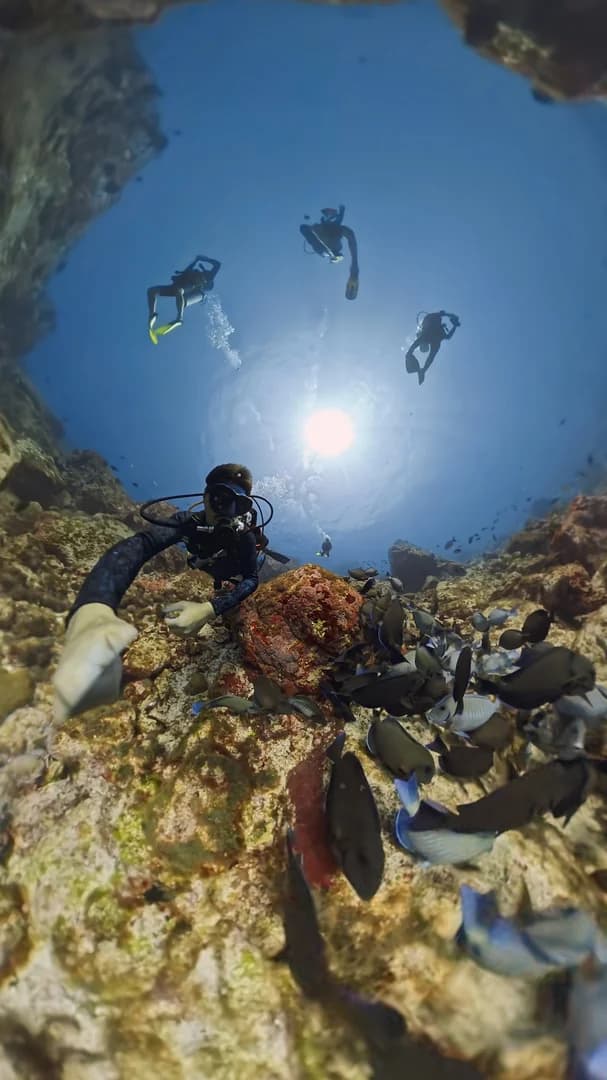
Fernando de Noronha, Pernambuco
Spectacular canyons and caves
★ 5.0 · 2 reviews
Recife, Pernambuco
Saveiros is a 29m tugboat deliberately scuttled in May 2006 off Recife's Boa Viagem beach, one of three sister vessels sunk together with Taurus and Mercurius to form Pernambuco's artificial reef park. The hull rests upright and largely intact on a sandy bottom near 29m, with deck structures rising to about 18m, so certification above Open Water is required. Visibility regularly tops 30m with negligible current, and the engine room and wheelhouse are open for careful penetration. Before this second life, the tug logged over 30 years under Wilson, Sons, including work on the Rio-Niteroi Bridge in the 1970s. Expect nurse sharks, sea turtles, stingrays, groupers, moray eels and dense schools of grunts and porkfish circling the wreck.
★ 5.0 · 2 reviews
Ilhabela, São Paulo
Transatlantic ship that sank on 16/10/1908 after striking the Bustamante rocks, near Ponta da Sela, in dense fog. Wreckage lies between 9 and 22 m, 50 m from shore - one of the most accessible wrecks in Ilhabela.
★ 5.0 · 2 reviews
Ilhabela, São Paulo
Small protected cove on Ilhabela's southern coast — calm clear water, rocky pool ideal for snorkeling and beginner shore dives via Atlantic Forest trail.
★ 5.0 · 2 reviews
Fernando de Noronha, Pernambuco
Dive site in Fernando de Noronha, a Natural Heritage of Humanity. Crystal-clear waters, exceptional biodiversity of the archipelago.
★ 5.0 · 1 reviews
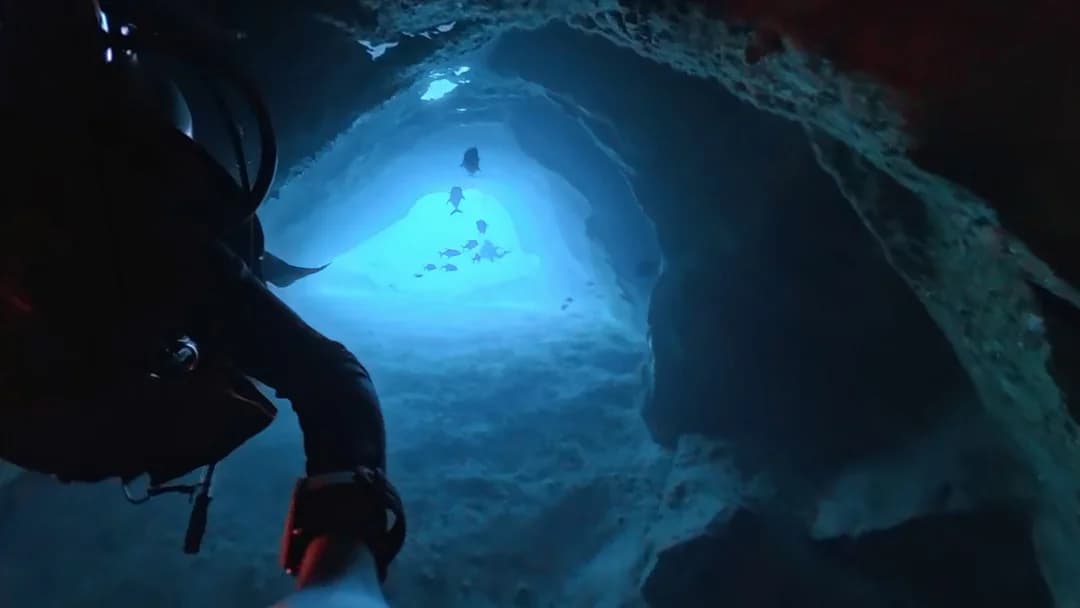
Fernando de Noronha, Pernambuco
Cave 15m x 30m, rays and grouper.
★ 5.0 · 1 reviews
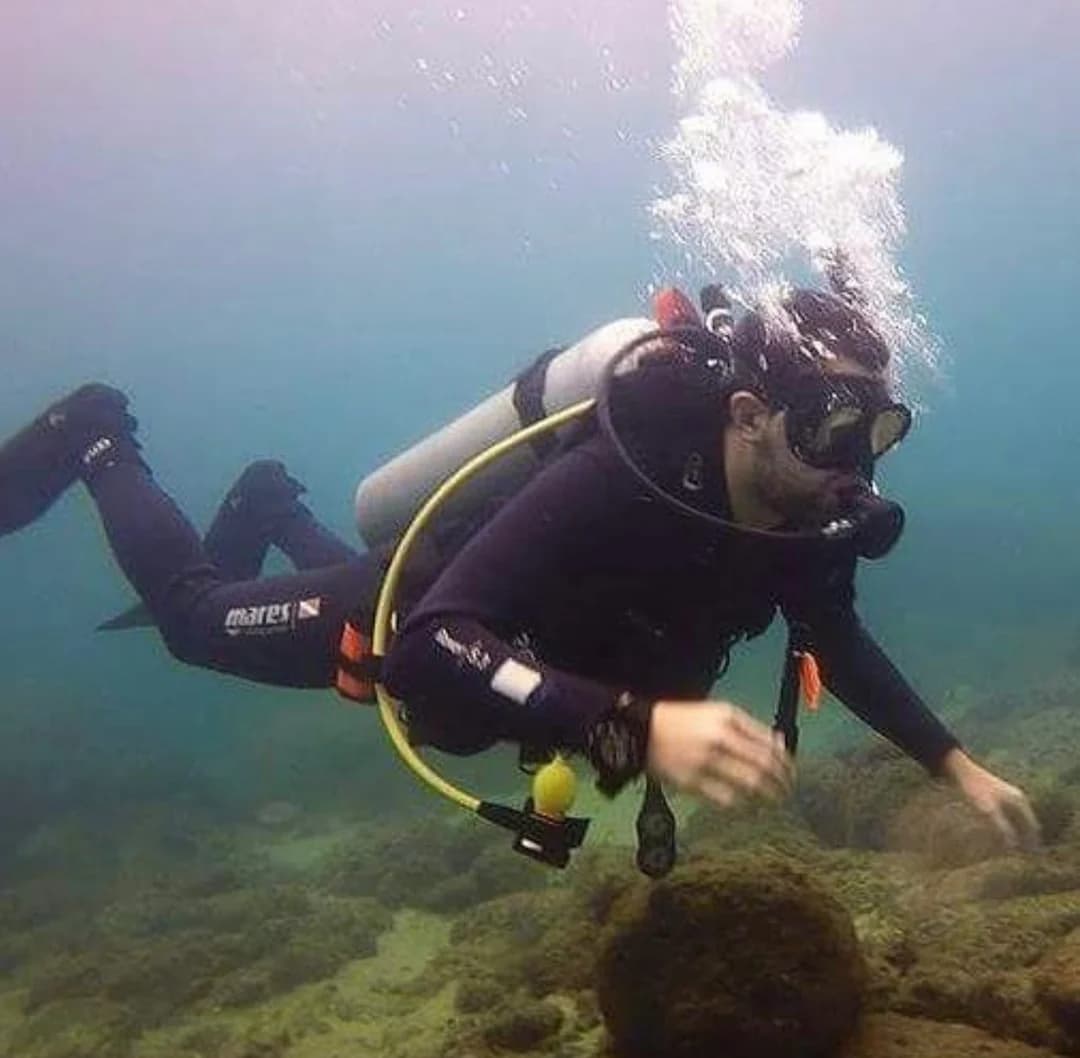
Ubatuba, São Paulo
Ilha Anchieta State Park in Ubatuba/SP. Dive sites featuring rocky reefs and preserved biodiversity.
★ 5.0 · 1 reviews
Pernambuco
Mercurius shipwreck in Pernambuco. Wreck with large fish and structure for technical diving.
★ 5.0 · 1 reviews
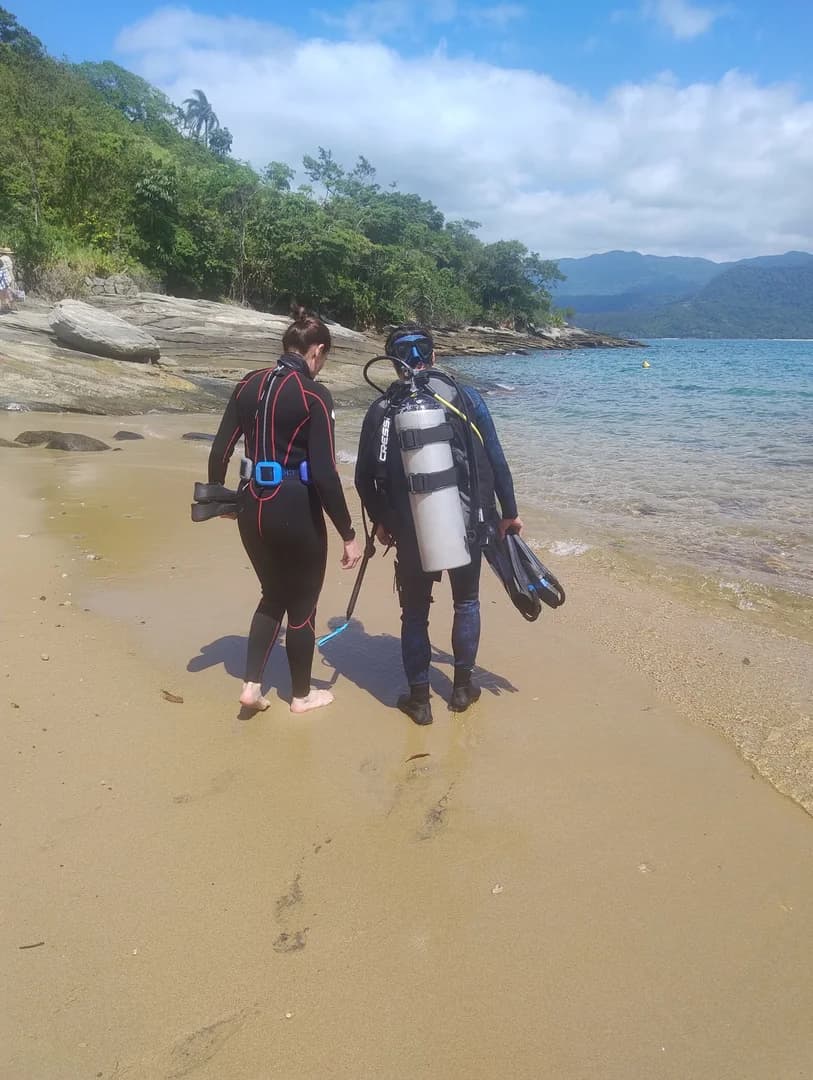
Ilhabela, São Paulo
Small cove at the southern end of Portinho bay in Ilhabela, inside the same sheltered arc as the classic baptism shore site. Calm sand entry leading to a shallow rocky shoreline (up to ~8m), commonly used for check-out dives, snorkeling and occasi...
★ 5.0 · 1 reviews
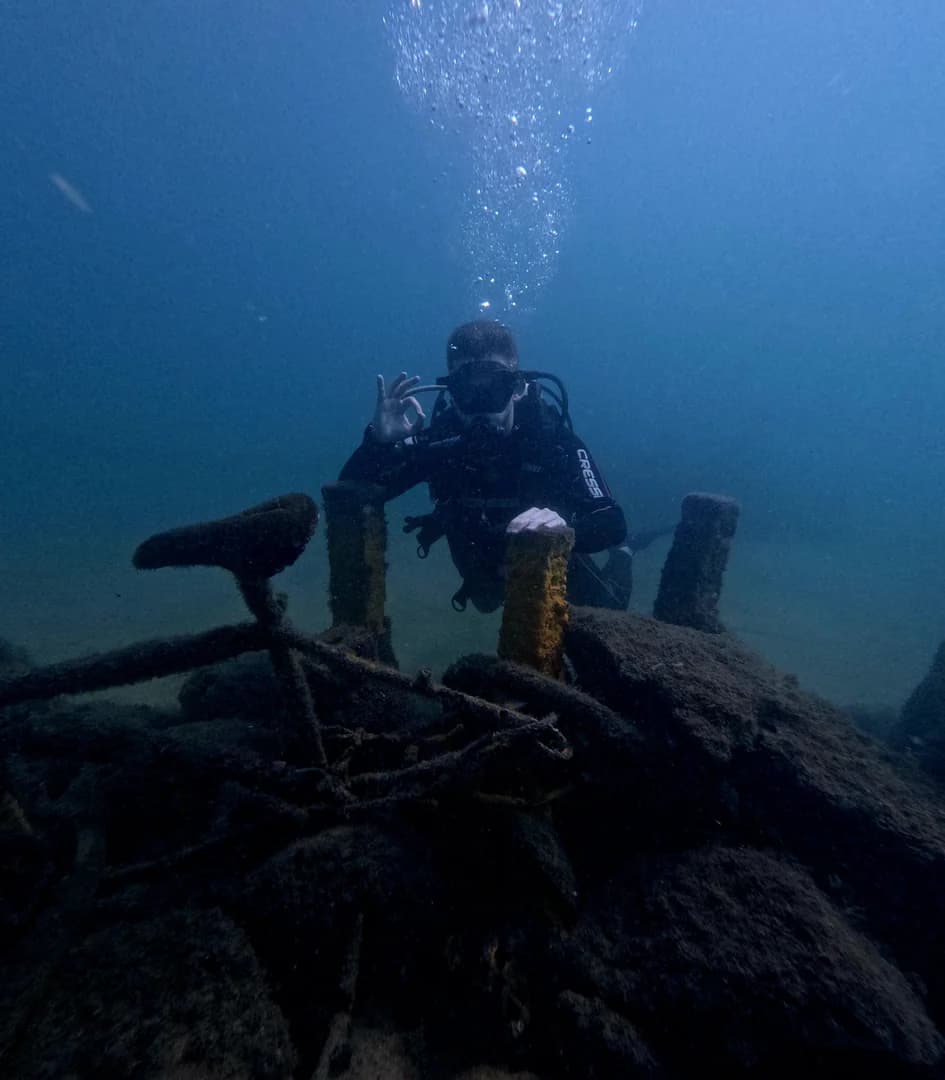
Ilhabela, São Paulo
Marine Ecological Sanctuary in Ilhabela, approximately 100m from the coast in front of Praia das Pedras Miudas. Rocky shoreline with shallow zones (6 - 10m) ideal for introductory dives and courses, and deeper areas to the south with canyons and s...
★ 4.6 · 5 reviews
Jaboatão dos Guararapes, Pernambuco
Portuguese galleon sunk in 1690 off Praia de Candeias. One of the oldest historical wrecks in Brazil, with submerged archaeological remains. Approximate coordinates - confirm with local operator.
Recife, Pernambuco
Cargo barge sunk off the coast of Recife, part of Pernambuco's Artificial Wrecks Park. The structure is colonized by corals and serves as shelter for moray eels and groupers. Approximate coordinates - confirm with local operator.
Bonito, Mato Grosso do Sul
Crystal-clear spring in Bonito/MS. Snorkeling with visibility of 20+ meters among dourados, piraputangas and aquatic plants. Ideal for beginners.
Recife, Pernambuco
Areeiro (sand transport vessel) San Martin sunk off the coast of Recife, part of the artificial wreck complex. It harbors schools of jacks and rays. Approximate coordinates - confirm with local operator.
Caravelas, Bahia
Brazil's first marine park, 70 km off Caravelas, with endemic mushroom-shaped coral chapeirões, turtles and humpback whale song from 5 to 25 m.
Sao Sebastiao, Sao Paulo
Granite archipelago and ecological reserve 35 km off São Sebastião, with rocky walls, swim-throughs and pelagic encounters from 5 to 40 meters.
Fortaleza, Ceará
Wreck of a Bandeirantes aircraft from the FAB that crashed in 1985 18 miles off the port of Mucuripe, within the Marine Park. Part of the structure remained submerged as an artificial reef; today largely disappeared. Approximate coordinates - conf...
Plano Piloto, Distrito Federal
Diving in the Lago Paranoa reservoir, Brasilia/DF. Urban freshwater used for courses and checkouts - visibility varies according to the season.
Parnamirim, Rio Grande do Norte
Also spelled Barreirinha, a point offshore from Pirangi do Sul. Sandstone formation with schools of fish, moray eels, and sea turtles. Light dive, suitable for first tank dives. Approximate coordinates - confirm with local operator.
Recife, Pernambuco
Batelao (cargo barge) sunk in shallow waters off the coast of Recife. Shallow depth, ideal for check-dives and advanced diver training. Approximate coordinates - confirm with local operator.
Natal, Rio Grande do Norte
Located 14 miles from Natal, this site features caves, arches, and sandstone columns (agulhas) covered with tube sponges. Groupers, barracudas, and occasionally hammerhead sharks appear in the area. Considered one of the best dive sites in Brazil....
Santos, São Paulo
A spectacular cleft on the eastern tip of Laje de Santos that penetrates approximately 50 m into the rock, reaching 18 m depth. It shelters fish schools, sea turtles, and giant groupers, but is only safe to dive in ideal sea conditions.
Ipojuca, Pernambuco
Reef shelf located 200m from Porto de Galinhas beach. Allows for daytime and nighttime diving, with lobsters, scorpionfish, octopuses, flatfish and moray eels. Approximate coordinates - confirm with local operator.
Ipojuca, Pernambuco
Rounded reef formation shaped like a cake off the coast of Porto de Galinhas. Frequented by rays, moray eels, groupers, and large snappers. Approximate coordinates - confirm with local operator.
Bonito, Mato Grosso do Sul
A floating attraction in Bonito/MS featuring crystal-clear waters and freshwater aquatic fauna.
Fernando de Noronha, Pernambuco
Eroded volcanic rock, drift dive
Fernando de Noronha, Pernambuco
Cave with air pocket in the ceiling
Fernando de Noronha, Pernambuco
Turtles, Baia do Sueste.
Fernando de Noronha, Pernambuco
Wall, groupers, currents
Fernando de Noronha, Pernambuco
Deep underwater mountain
Fernando de Noronha, Pernambuco
Underwater mountain with coral formations.
Fernando de Noronha, Pernambuco
Vertical wall, sponges.
Fernando de Noronha, Pernambuco
Sheer walls with sponges. Suitable for beginners.
Bombinhas, Santa Catarina
Island within the Arvoredo Marine Biological Reserve with approximate depth of 16 to 20 meters. Exposed site with strong currents, rich fauna and large schools of fish; diving permitted only with authorization from ICMBio.
Santos, São Paulo
The north-facing side of the Calhaus rock formation, oriented toward Laje de Santos approximately 3 km to the southeast of the main island. A slightly irregular wall descending from 8 to 25 m; the most sheltered face of the Calhaus complex.
Santos, São Paulo
The south face of the Calhaus formation in Laje de Santos Marine Park, fully exposed to the open ocean with constant currents. It descends to 40 m and concentrates migratory pelagic species not seen in the sheltered areas of the park.
Santos, São Paulo
A U-shaped tunnel cutting through the Calhaus rock at Laje de Santos, with a central emergent arch and large boulders on the bottom at 18 m. Requires precise buoyancy control and ideal sea conditions.
Pedregulho, São Paulo
Canyon with vertical rock walls in freshwater in the interior of Sao Paulo State. Technical diving with distinctive rock formation.
Sacramento, Minas Gerais
Underwater canyon in Sacramento/MG with vertical walls. Technical freshwater dive with good visibility during the dry season.
Arraial do Cabo, Rio de Janeiro
Underwater cave discovered by diver Antonio Sergio, named in honor of his father. Located between Gruta Azul and Fenda da Camarinha, with a tunnel reaching up to 120m in length and 35m in depth. Requires cavern/overhead certification.
Recife, Pernambuco
Transport barge sunk in 1973 due to bad weather approximately 12 miles from Recife port. Technical diving in open water, frequented by rays and pelagic schools. Approximate coordinates - confirm with local operator.
Recife, Pernambuco
Copernico shipwreck located off the coast of Recife, situated in the shipwreck corridor at approximately 26-30m depth. Fragmented hull with great associated biodiversity. Approximate coordinates - confirm with local operator.
Fernando de Noronha, Pernambuco
Impressive underwater canyon
Recife, Pernambuco
Brazilian Navy corvette sunk as an artificial reef off the coast of Recife. Not to be confused with Corveta V17 Ipiranga in Noronha; this one is located in the wreck zone of Recife at approximately 32m. Approximate coordinates - confirm with local...
Fernando de Noronha, Pernambuco
Complete wreck, 56m, 1983
Cabo de Santo Agostinho, Pernambuco
Mining dredge that sank in 1981 near the mouth of Rio Massangana, in Suape. Intact hull at 29-32m, now an artificial reef hosting schools of sergeant majors, moray eels, and cardinalfish. Approximate coordinates - confirm with local operator.
Arraial do Cabo, Rio de Janeiro
Cove on Ilha do Cabo Frio featuring typical rocky shore fauna, with its name referring to resident fish schools. Maximum depth of 18 meters.
Arraial do Cabo, Rio de Janeiro
Seaward side of Ilha do Cabo Frio, featuring large rock walls, crevices, and depths ranging from 20 to 45 meters. Large pelagics passing through are commonly sighted; strong currents require advanced certification.
Arraial do Cabo, Rio de Janeiro
Cove at the southernmost point of Ilha do Cabo Frio, featuring a stepped rocky formation that gives the site its name. Maximum depth of 18m, home to schools of fish and occasional sea turtles.
Bombinhas, Santa Catarina
Shipyard Refuge at the tip of Bombinhas, accessible by trail or boat from Porto Belo. Average depth of 3 to 8 meters, crystal-clear waters protected from the wind, excellent for certification dives and marine life observation.
Arraial do Cabo, Rio de Janeiro
Cave with two entrances: one to the south at 12m and another to the east at 15m. The tunnel reaches a maximum depth of 35m. Overhead environment dive, requires cavern or cave certification.
Arraial do Cabo, Rio de Janeiro
Historic site attributed to a 17th-century Spanish galleon in the vicinity of Ilha do Cabo Frio. Note: the Portuguese galleon Santissimo Sacramento (1668) wrecked in Bahia; this point is registered locally as a distinct archaeological site.
Ipojuca, Pernambuco
Old galleon (circa 1700) sunk 18 miles off the coast of Serrambi. Visible wooden keel, hull fragments, and anchors; historical technical dive. Approximate coordinates - confirm with local operator.
Arraial do Cabo, Rio de Janeiro
Underwater cave on Ilha do Cabo Frio with entrance at 10m and characteristic blue light. Should only be dived on calm sea days - the internal water flow is strong and there have been fatal accidents. Requires certification and experience.
Angra dos Reis, Rio de Janeiro
Rare underwater cave on Ilha Grande featuring a fluorescent blue-turquoise water phenomenon. Access is through a crevice in the rocky outcrop at approximately 8m depth, leading to an underground chamber. Recommended only for experienced divers wit...
Olinda, Pernambuco
Ship sunk in 1956 at Baixio de Itabaianos, one mile off the coast of Olinda. Partially preserved structure on shallow bottom, with high concentration of reef fish. Approximate coordinates - confirm with local operator.
Armação dos Búzios, Rio de Janeiro
Island in Buzios famous for diving with sea turtles. Depths of 8 to 25m, visibility of 5 to 12m, underwater rock formations. Ideal for drift dives.
Angra dos Reis, Rio de Janeiro
Elongated island in the Freguesia de Santana archipelago, north of Ilha Grande. Forms a natural lagoon with the islands Macacos and Redonda, a sanctuary of clear waters and abundant marine fauna. Do not confuse with Ilha Comprida in Arraial do Cab...
Rio de Janeiro, Rio de Janeiro
Ilha Comprida in the Monumento Natural das Cagarras. Submarine rocky reefs and biodiversity of Rio's coastline.
Fernando de Noronha, Pernambuco
Three easy caverns, ideal for beginners.
Angra dos Reis, Rio de Janeiro
Two small rocky islets near the north coast of Ilha Grande, with Caribbean-toned waters. Visibility up to 7m depth to the naked eye, abundant marine life around the rocky outcrops. Frequently confused with the Botinas. Approximate coordinates - co...
Guarapari, Espírito Santo
Ilha Escalvada offshore from Guarapari/ES. Rocky outcrops, schools of fish and occasional sea turtle encounters.
Armação dos Búzios, Rio de Janeiro
Rocky island in Buzios, approximately 30 minutes by boat. Drift dive around the island, featuring sun corals, large sea turtles, and rays. The name comes from a lightning strike that hit part of the island; despite its name, it is a marine life sa...
Angra dos Reis, Rio de Janeiro
Ilha Grande in Angra dos Reis. Multiple sheltered spots with biodiversity, calm waters and good visibility. A classic for courses.
Ubatuba, São Paulo
Island in the Arquipelago das Couves, north of Ubatuba, between Ponta da Cruz and Ponta da Jamanta in open sea. Multiple trails (Morcego, Pigmeu, Pedra da Cachorra) with depths of 3-25 m, large schools of fish and rocky labyrinths.
Rio de Janeiro, Rio de Janeiro
Ilha Rasa in the Monumento Natural das Ilhas Cagarras, offshore from Ipanema. Rocky shores with Rio de Janeiro biodiversity, schools of fish and sea turtles.
Rio de Janeiro, Rio de Janeiro
Ilha Redonda in the Cagarras archipelago, RJ. Offshore rocky formation with schools of fish, octopuses and sea turtles - a classic Rio dive site.
Ubatuba, São Paulo
Island in the archipelago off Ubatuba with multiple dive sites (Saco da Professora, Saco do Paia, Saco do Funil, Canal dos Pescadores, Morro Alto). Depths 5-52 m, visibility up to 25 m, common sightings of dolphins and whales during the boat ride.
Fernando de Noronha, Pernambuco
Fire coral, calm waters
Ubatuba, São Paulo
Paradise island in the north of Ubatuba with emerald-green waters. Costao de Fora 5-15 m, West Face of the Islet 12-23 m. Shallow depth and good visibility make it one of the best dive sites for beginners in the region.
Ilhabela, São Paulo
Buzios Island in Ilhabela/SP. Rocky shores and biodiversity of the Sao Sebastiao Channel.
Angra dos Reis, Rio de Janeiro
Uninhabited islet southeast of Ilha Grande, in open ocean, facing Lopes Mendes and Dois Rios. Famous fissure 4m wide and 15m deep traversing the island. Rich in corals, sea turtles, octopuses, squid, seahorses, and dolphins. External side with cav...
Arraial do Cabo, Rio de Janeiro
Generic dive site referring to Ilha do Cabo Frio, the main diving island of Arraial, part of the Biological Reserve. It concentrates more than twenty dive points between the inner sea and outer sea.
Fernando de Noronha, Pernambuco
Marine turtles, corals
Arraial do Cabo, Rio de Janeiro
Small island off Praia Grande, home to the remains of the wreck of the brig Dona Paula (1827), including cannons. Moderate depth and good visibility, suitable for beginner and intermediate divers.
Paraty, Rio de Janeiro
Small island surrounded by crystal-clear waters approximately 4km from the center of Paraty, in front of Praia do Jabaquara. One of the clearest waters in the region, ideal for recreational diving and snorkeling, with large schools of small fish. ...
Pontal do Paraná, Paraná
Archipelago of the Parque Nacional Marinho das Ilhas dos Currais, approximately 11 km offshore from Pontal do Parana. Three small rocky islands with corals, moray eels, sea turtles and schools of fish; landing is prohibited and diving is only perm...
Vila Propício, Goiás
Crystal-clear freshwater lagoon in Vila Propicio/GO. Floating and light diving in a karst spring.
Bombinhas, Santa Catarina
A reference dive site in Bombinhas, featuring a natural pool and depths of up to 25 meters. Clear waters and pleasant temperature, ideal for both beginners and experienced divers, with rich marine life of small fish.
Fernando de Noronha, Pernambuco
Largest coral formation in Latin America
Santos, São Paulo
Reserva Estadual Marinha da Laje de Santos, the main offshore dive in Sao Paulo. A granite outcrop protected since 1993, located 40 km from the coast, featuring rocky walls and pinnacles ranging from 6 to 35 meters. Visibility reaches up to 30 met...
Angra dos Reis, Rio de Janeiro
Also known as Laje da Matariz, near Bananal beach. Scattered wreckage of a helicopter that crashed in 1998, which resulted in the death of businessman Eduardo Tapajos. Intense marine life around the remains, white sand bottom down to 15m. Approxim...
Mariana, Minas Gerais
The world's largest gold mine open to visitors, active from 1719 to 1954 in Mariana, Minas Gerais, with approximately 30 km of tunnels. After decommissioning, abandoned galleries flooded with groundwater, forming a crystal-clear underground minera...
Recife, Pernambuco
Tug Minduano sunk off the coast of Recife, part of the artificial wreck park. The hull stands upright with penetrable interior for divers with specific training. Approximate coordinates - confirm with local operator.
Fernando de Noronha, Pernambuco
Natural nursery, juvenile species
Angra dos Reis, Rio de Janeiro
Wreck from 1891 on Laje Alagada (formerly Laje do Colombo), near the exit of Angra port. A steam cargo ship measuring 55.8m x 7m, owned by Dr. Bezerra de Menezes, collided with the reef while carrying wood and beer. Dismantled wreckage scattered b...
Santos, São Paulo
An old iron fishing vessel from the Caneco shipyard, sunk in 1992 as the first artificial reef in Brazil, at the eastern tip of Laje de Santos at 22 m depth. Now in advanced deterioration; penetration into the holds is prohibited by the park.
Ilhabela, São Paulo
British cargo ship 60.7 m long built in 1883, sunk on 07/27/1920 at Ponta do Ribeirao, near Praia do Curral. Boiler, stern, shaft, propeller, and rudder are visible. Calm waters between 5 and 9 m, ideal for certification dives.
Rio de Janeiro, Rio de Janeiro
Historic wreck near Ilha Rasa in the Cagarras. Wreck with marine life colonizing the structure.
Ilhabela, São Paulo
English cargo ship that sank on 12/12/1882 southwest of Borrifos, en route from Santos to New York with coffee. Wreck debris between 9 and 17 m, 30 m from shore, average visibility. Approximate coordinates - confirm with local operator.
Ilhabela, São Paulo
English cargo ship (1882) that departed from Santos on 09/11/1884 heading to NY with coffee and struck the rocks in front of Morro do Simao, Ponta da Sepituba. Known as the 'ship of crockery'. Wreck debris scattered between 5 and 17 m. Approximate...
Fernando de Noronha, Pernambuco
Greek ship from the 1920s. Shallow wreck suitable for beginners.
Ilhabela, São Paulo
Mixed packet ship that sank in 1906 during a storm. Wreck debris between 40 and 60 m, 200 m offshore, poor visibility - technical diving only. Approximate coordinates - confirm with local operator.
Ipojuca, Pernambuco
The Goncalo Coelho ship was sunk in 1999 as an artificial reef off Praia de Serrambi. It honors a navigator from Americo Vespucio's fleet; today it hosts a large diversity of reef fish. Approximate coordinates - confirm with local operator.
Ilhabela, São Paulo
Navy tugboat with 51 men on board that collided with the cargo ship Borborema in 1913 near Farol da Ponta do Boi in dense fog. It rests at 40 m depth, 80 m from shore - advanced dive. Approximate coordinates - confirm with local operator.
Arraial do Cabo, Rio de Janeiro
English cargo ship Harlingen (113m, 3,470t) sank in 1906 while coming from Buenos Aires. Bow at 18m with Hawkins anchor still in the hawsepipe; stern around 25m. Located in Furnas das Mulheres, near Pontal do Atalaia.
Ilhabela, São Paulo
English cargo ship 104 m long with steel hull and steam propulsion, sank on 24/03/1909 due to bad weather. Wreck debris scattered between 8 and 19 m depth, approximately 40 m from the coast. Coordinates are approximate - confirm with local operator.
Ilhabela, São Paulo
The 'Brazilian Titanic' - a Spanish ocean liner that collided with the submerged reef at Ponta da Pirabura on 03/05/1916 at 4:15 AM, sinking in 5 minutes with hundreds of victims. Wreckage between 17 and 50 m, strong currents, visibility ~1.5 m - ...
Ilhabela, São Paulo
German-origin steamship (Siegmund), confiscated by Brazil and renamed Therezina, ran aground on 03/02/1919 at Ponta do Boi while carrying coffee and mail pouches. Now dismantled, it rests between 8 and 17 m. Approximate coordinates - confirm with ...
Arraial do Cabo, Rio de Janeiro
Steamship Teixeirinha sunk in 1906 at Ponta da Jararaca. Dismantled wreck scattered between 18 and 38m. Requires Advanced certification; attention to current and depth.

