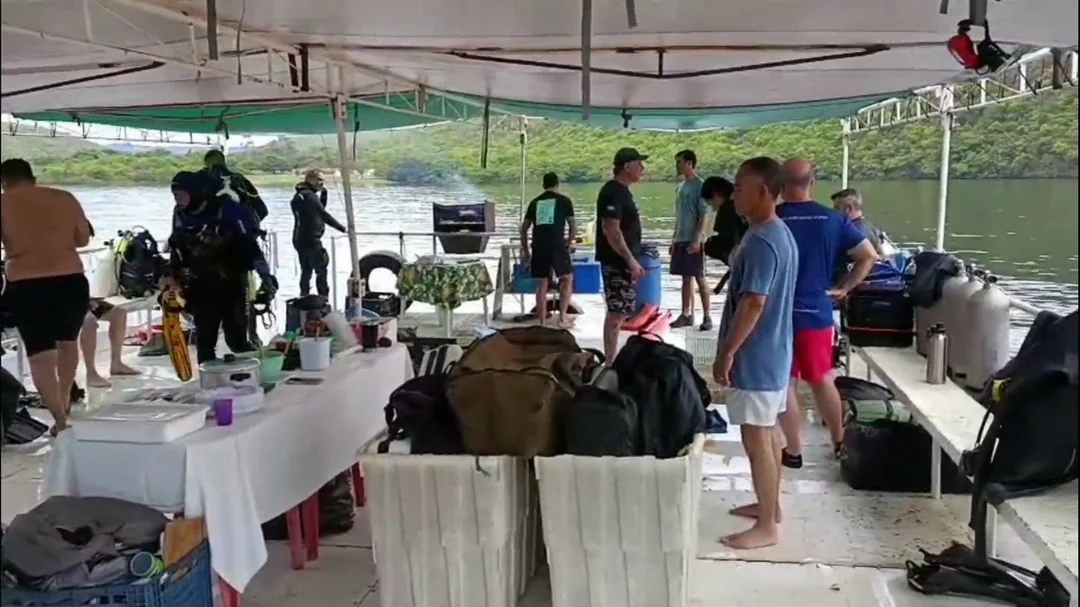
Corredeira formed over a rocky bed, where erosion of the rock carved out pools along the watercourse. In the early 1970s, the hydroelectric plant and the damming of the Rio Grande formed Lago de Jaguara and flooded houses, brickworks, iron structures and bridges in the region. The dive sites of Rifaina have fish such as traíra, tilápia and lambari, as well as crustaceans and molluscs. In Rifaina, diving conditions tend to be best from June to September.
Information on this page, including technical data such as depth, current, visibility, access, and recommended level, is informational and may vary. Confirm actual conditions with a local operator before the dive.
Tap to see what might appear on this dive
Reviews are from other divers — personal experiences, not guarantees.

